

GBN talks to Golf Saudi CEO Noah Alireza about the organisation’s mission, the strategic role of golf in Saudi Arabia, the country’s massive investment in new golf courses and resorts, and its growing influence across the global golf ecosystem
What is Golf Saudi’s overarching role within Saudi’s golfing infrastructure?
Our mandate at Golf Saudi is to build golf in the Kingdom. We view golf as a strategic sport with the power to act as a bridge — personally, socially, and economically.
Speaking as a golfer myself, the game of golf reflects life: you always want to get better. For young people coming into the game, even if they don’t want to become a tour professional or an elite amateur, golf has the ability to equip them with many of the skills that will help them succeed in their professional life.
Golf is also a social bridge. Where else can you spend four or five hours with someone in a setting that naturally builds trust? And trust is the foundation of business. That’s why, when we host events worldwide, we often have the Future Investment Initiative and the Ministry of Investment alongside us.
Economically, golf is a proven industry. In the United States, it is a $225 billion market – half direct and half indirect. The US has 28 million golfers and another 15-20 million off‑course participants, creating a total market nearing 48 million. It’s a vibrant economy – and in Saudi Arabia we’re starting from a blank canvas.
Golf is one of 98 sporting federations in Saudi Arabia. Golf Saudi is a company under the Saudi Golf Federation, operating beneath the Saudi Olympic & Paralympic Committee structure. Our role is to develop the golf economy. Our strategy rests on two pillars: supply and demand. We even title our key executives ‘Chief Supply Officer’ and ‘Chief Demand Officer’ – essentially the CIO and CMO – to reinforce how important the economic model is.
What is the current supply of golf courses in the Kingdom and where do you want to be in 5-10 years from now?
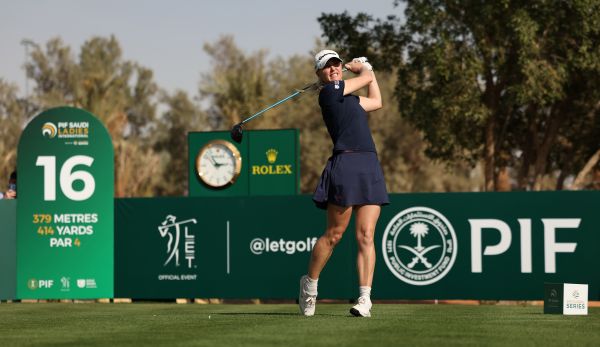
When we compare ourselves to the other gulf states, Saudi Arabia currently has 0.2 golf courses per million people – with just seven public-access courses. The regional benchmark is 2.2 per million, and in the US, it is over 10 courses per million people. To move from a nascent to an emerging market we need to multiply today’s number by 11, reaching around 77 courses in the next decade. That’s the scale of the supply gap.
We’ve learned some key lessons from our earlier developments. Royal Greens in King Abdullah Economic City is a beautiful course on the Red Sea, but it’s 90 minutes from Jeddah. You can’t grow local participation with courses that far from population centres. Golfers might travel two hours in mature markets, but not in a pre-emerging market.
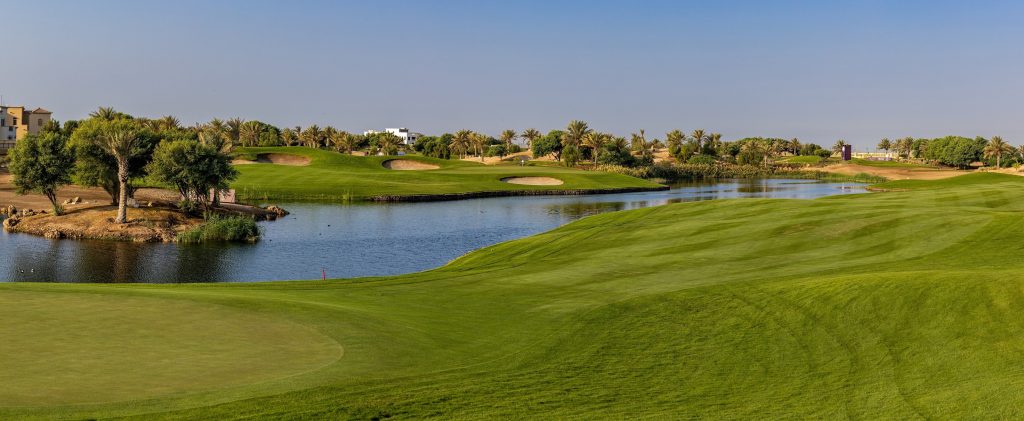
So we are focused heavily on developing inner-city golf. Our mandate includes developing seven urban golf courses across Riyadh, Jeddah, and the Eastern Province — areas that represent more than half the national population. We are also supporting golf projects in the other 13 regions, but the first phase is about offering mass accessibility.
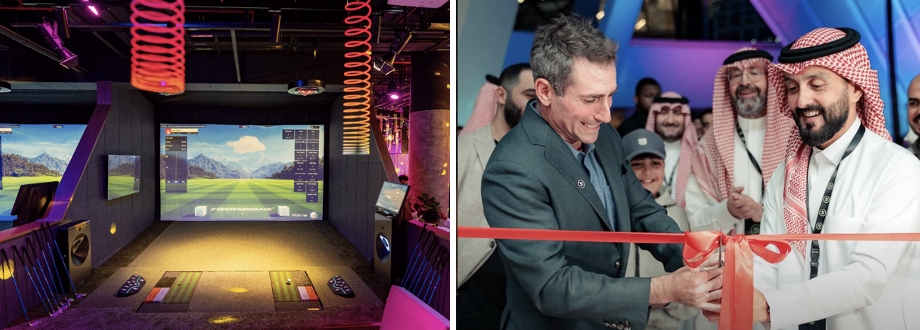
Off‑course supply is equally important. We’re developing a complete ecosystem: entertainment golf, simulators, driving ranges, retail, equipment, and coaching infrastructure. We are opening a Topgolf in Riyadh, likely to be the largest Topgolf in the world, designed as an innovation hub rather than a copy‑and‑paste model.
We are also launching Five Iron Golf and other standalone golf retail concepts. Five Iron opened in April in Riyadh’s financial district with 11 simulators, membership zones, and a premium lounge.
Are you managing these projects within Golf Saudi?
Golf Saudi participates across the full value chain. We advise developers from the master planning stage, help select architects, plan course economics, and support contractor selection.
We also operate a specialised turf business with rights to a specific grass IP across the Middle East — the same grass used in Qatar’s World Cup stadiums, Yas Links, and other top regional courses.
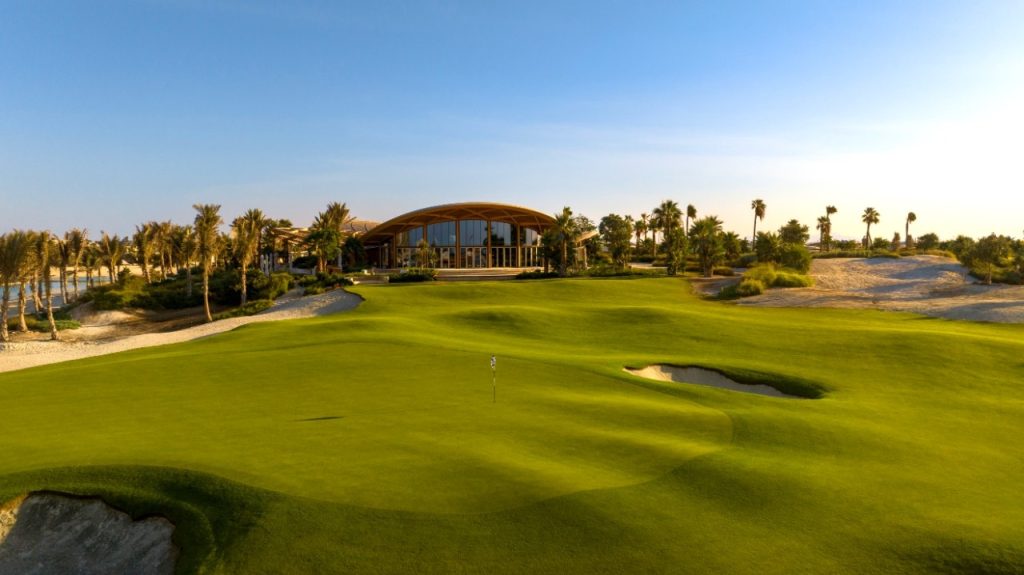
We also manage and operate courses. For example, Golf Saudi manages Shura Links, and we have recently taken on the management at Qiddiya, home to Jack Nicklaus and Nick Faldo designs. Floodlighting is a major priority because Saudi has a strong night culture. At many courses, midweek daytime utilisation is around 32%, but night utilisation exceeds 92%.
Is Golf Saudi involved in selecting the architects for the new courses being built?
Absolutely. We are developing inner‑city courses to bring golf to where people live. Land availability is challenging in dense cities like Riyadh or Jeddah, but we are receiving excellent support from local and national authorities.
We will announce new courses in the coming months and years. Some will be nine holes expandable to 18, but the goal is always to deliver a full championship experience where possible.
Saudi Arabia is open to doing things differently. We will have world‑class designers, local designers, and even some unexpected names who are not traditional golf architects but can offer compelling creative ideas. It’s a rare opportunity to build modern golf with respect for tradition but freedom to innovate.
Beyond design, we support developers with business planning, contractor engagement, project management, construction, turf supply, and operations. The grass at Shura Links — Platinum TE — is grown in Riyadh and is in high demand across the region.
We manage numerous facilities and compete for management contracts just like Troon or other global operators. Qiddiya, where we have Nicklaus and Faldo courses, plus a floodlit academy course, is a prime example.
Can you expand on how you plan to grow golf participation in the Kingdom among the local Saudi population?
Demand creation is the second pillar of our mandate at Golf Saudi. We’re launching Go Golf, an integrated programme that begins with the questions such as ‘Why golf?’ ‘What is golf?’ ‘How do you get into golf?
With Go Golf every Saudi can sign up for 12 free lessons, after which they receive a digital Go+ Passport that qualifies them to access proper golf courses – similar to European system where a basic proficiency level is required. The data generated from this programme will give us a dynamic understanding of who is playing, where, and how often.
We are also using a loyalty-style model. All connected ranges feed distance‑based metrics into a user’s account: hit a 50‑yard and a 75‑yard shot and you’ve banked 125 ‘golf miles’. Miles unlock discounts on pro shops, membership, lessons and more. The idea is to make progression fun and trackable.
We already have 15,000 Go Golf registrants, despite the limited supply of facilities. That tells us demand is there – and that we must prioritise supply before going loud on marketing. Saudi Arabia is a very young nation – 60% of the population is under 30 – so technology‑driven golf experiences like Five Iron Golf and Topgolf are also key to driving participation.
Retail is another area we’re transforming. Many Saudis travel abroad to buy clubs, apparel, or accessories. That changes this summer when we launch our own stores with a fashion‑led look and feel, supported by full equipment inventory. We’re building these ourselves initially but expect private‑sector partnerships as the market matures.
The simulator market already features several private‑sector operators. Our goal is to support them, not crowd them out. We have frequent meetings with private developers interested in Topgolf, Five Iron, and other technology‑driven concepts.
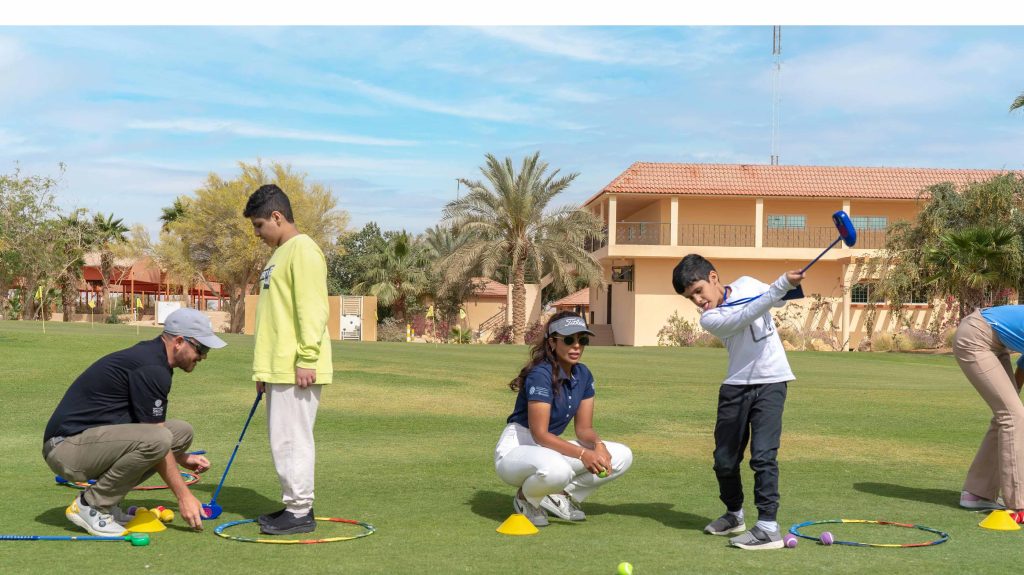
Topgolf and simulators require some skill. What outreach are you doing in schools and colleges to introduce young Saudis to the game?
Our national mission starts with plastic clubs and basic teaching methodologies, tailored to children aged 7–13. School programmes provide the first touchpoint, followed by Go Golf facilities. From there, talent identification feeds promising kids into the National Academy. That’s where competitive juniors begin structured development.
We benchmarked the pathway needed to produce elite players. To eventually generate top‑100 global golfers, we need a base of around 48,000 active golfers, with around 4,000 competing regularly. In year one, our target is to develop a cohort of at least 100 strong young competitors who can see what the high-performance pathway looks like.
How does golf course infrastructure development contribute to Saudi Arabia’s global positioning?
Sports tourism has incredible potential. Saudi Arabia’s golf infrastructure is extremely advanced — world‑class courses, unique landscapes, and high‑quality facilities. But many people still don’t know that.
By developing top-tier courses and hosting major events, we attract tourists who want to experience that level of quality. It aligns perfectly with our national goals to increase tourism and to showcase the best of Saudi Arabia to the world.
While the men’s professional game is somewhat fractured at the moment, do you see a time when a DP World Tour event will return to Saudi Arabia?
Anything that helps grow the game locally and globally is something we will happily explore. There has been precedent in the past, though before my time. But the principle is clear: if it grows the game, we will look at it.