

From pioneering breakthrough technologies to redefining how golf shafts are designed and tested, Fujikura has built a reputation as one of the industry’s true innovators.
At the heart of that success lies a relentless pursuit of performance, driven by cutting-edge research, advanced materials and a commitment to understanding every detail of the golf swing. Daniel Jacobs, Director of Engineering at Fujikura and one of the driving forces behind the brand’s innovation, takes GBN readers behind the scenes of the company’s research and development process, explaining how its revolutionary enso motion capture system, VeloCore+ technology and state-of-the-art facilities continue to shape the future of golf shaft performance.
Where have you seen the biggest leaps in shaft performance?
As players continue to get bigger and stronger, we have to create products that keep up with the highest-ever swing speeds. We also have to design products that golfers can hit well consistently. This is where our VeloCore+ technology really comes into play. This is what golf really is: controlling your misses.
What is the core goal at Fujikura?
To develop the best-performing golf shafts that we can to help all golfers play better golf. Knowing as much as we can about that golf shaft helps us to achieve our goals. All the research that we do on materials plays a key part in this, as does enso.
What is enso and why does it matter?
It’s what we call our internal 3D motion capture system. It’s similar to what’s used in animation for video games and movies, as well as some segments of sports science, such as biomechanics in baseball pitching and track and field. We can use it in a similar way to fine-tune a golf shaft.
With enso, we can look under a microscope like no one else can; we have 100% visibility of the shaft and the markers on the shaft throughout the entire swing. It’s why enso has been a huge part of our innovation over the years, allowing us to break up the golf swing into tiny fractions – 700 little data points. This provides an incredibly detailed analysis of how a shaft performs, measuring the forces that various players and speeds put on a shaft at any point during a swing.
How has enso evolved since its first iteration?
When we introduced enso technology in 2010, it revolutionized shaft design. It led to the introduction of the flagship VENTUS line with VeloCore technology in 2019, which set a new standard for speed and stability in performance wood shafts. And it’s continually evolving, both in terms of the hardware and in the way that we’re looking at the data. In 2026, the brand’s vision to continuously improve has seen even more technology added to the VENTUS family with the launches of the new VENTUS TR Red, TR Blue and TR Black – all built with enhanced VeloCore+ technology.
What have been some of the latest developments with enso?
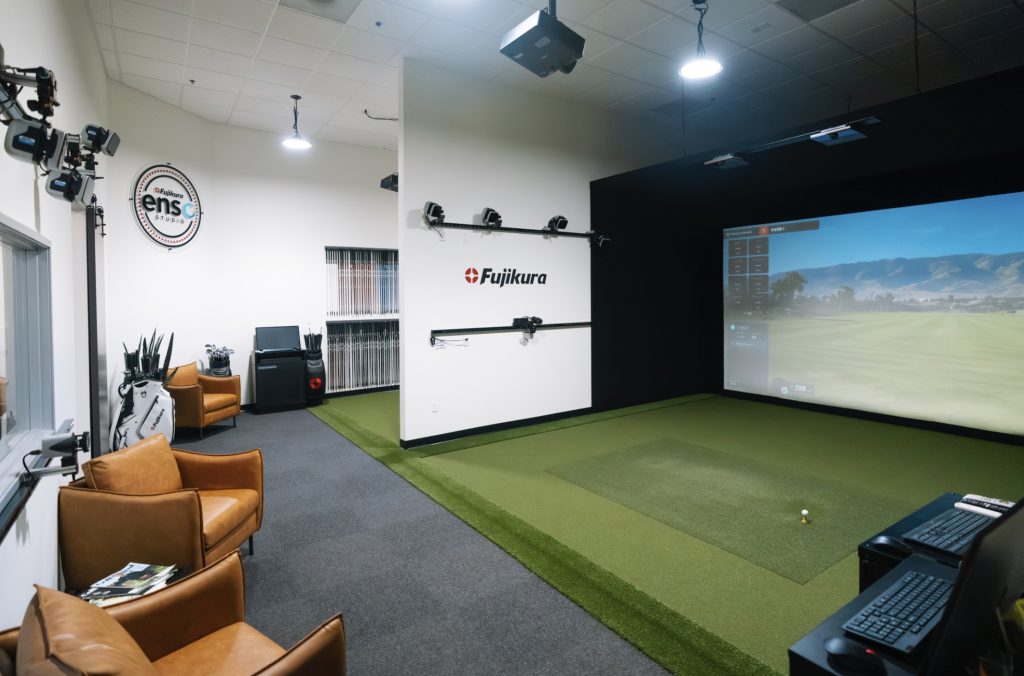
The beauty of it is that we can continue to upgrade it as long as we see fit. There will always be better cameras, and there will always be different ways to look at the data. We’re also using AI more than ever before, which allows us to capture and analyze data more efficiently. In short, we can look at even more data and get even more out of it. We also continue to add force plates, and we’ve added additional cameras – they now surround the entire golfer instead of just having them on one side. And we’ve upgraded to Trackman iO to capture ball flight indoors.
What is so significant about adding more force plates?
The new biomechanic force plates are fully integrated with our next-generation enso 3D motion capture system. The upgraded cameras will surround the golfer with better resolution, enabling us to place more markers on the shaft to ensure our capture process is more consistent for both right- and left-handed golfers. All these upgrades will increase visibility to what the shaft is doing throughout the swing and will help us understand how the golfer reacts to different shafts via ground reaction forces. It’s another layer that we now have access to thanks to enso 2.0.
How does enso help your team better understand real swing dynamics and apply that to shaft design?
In simple terms, we’re able to look at how the golfer is delivering the club and see how they are reacting to the club – so handle speeds, deflections, angular accelerations and velocities. All of this we’re able to look at with enso and separate the golfer input in the handle from how the rest of the shaft is reacting. We’re constantly learning from enso, and we can apply everything we learn to our golf shaft design. Whatever questions we have, whether we want to look at face closure, angle of attack, whatever it may be, we can design a shaft and mark it up on enso and measure it. Even if our hypothesis is wrong, we can still learn from it and apply it to our shaft development moving forward.
Fujikura has recently moved to a new HQ in Carlsbad. How has that helped your job?
The new headquarters, which is almost double the size of the previous facility, has given us a lot more space dedicated to R&D, with the new upgraded generation of enso. It features two hitting bays, one of which is purely dedicated to R&D and Tour fittings. Utilizing Trackman iO, next generation enso with new upgraded cameras, new software, and a new force plate system, the studio will allow our engineers and technicians to capture more holistic data about the golfer, their swing, and the impact the shaft can have.
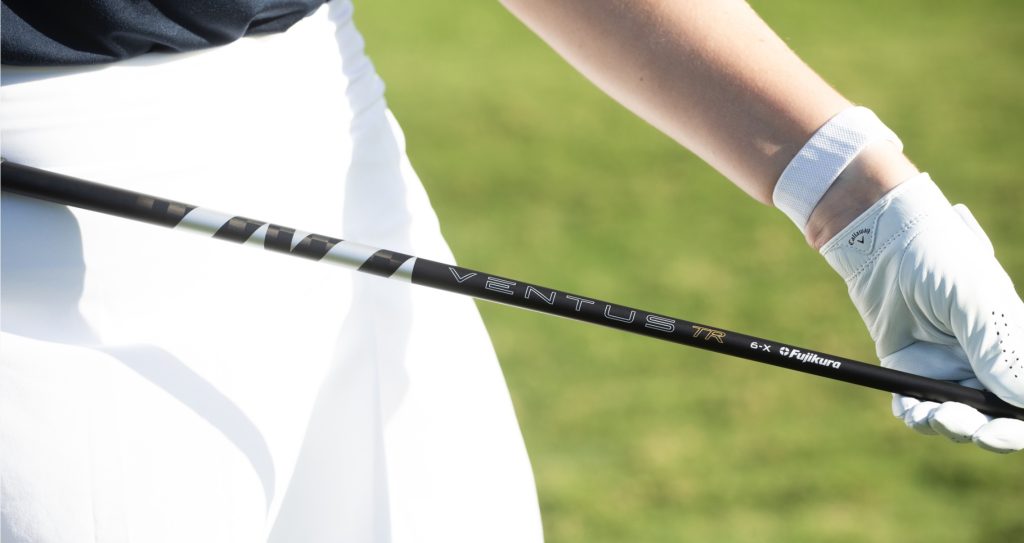
Speaking of new products, the new VENTUS TR Black has been in the winner’s circle several times over the past weeks, including on the Major stage. That must be great to see?
It’s been incredibly rewarding to see the immediate impact of the new VENTUS TR Black with VeloCore+ technology. We had complete confidence in the performance of the product, but seeing players put it straight into the bag and win so quickly is the ultimate validation. The first victory came when Viktor Hovland won the Travelers Championship just two weeks after the switch, before Ryan Fox made the switch just a week prior to his victory in the Open Championship at Royal Birkdale. Not only did he win his first Major with the new product, but he also equalled the lowest ever round at a men’s Major championship in the same week.