

The recent PING EDGA Camp in association with The PGA at The Belfry gave a unique insight for PGA Professionals to develop their business skill-set by improving their ‘G4D’ coaching, while gaining a better understanding of how custom-fitting can completely change the game for golfers who have a disability.
An introduction to EDGA’s international coaching programme for G4D (golf for the disabled), called ‘Learning from the Edges’, was shared with 20 PGA Professionals and AGMS (Applied Golf Management Studies) degree students from the University of Birmingham, in a full day of activity at the renowned West Midlands golf venue.
To enhance this learning experience, the EDGA and PING team also welcomed four experienced G4D players who generously gave their time to demonstrate their method of playing, take part in live coaching sessions and discuss their experiences with the attendees.
EDGA and PING have been collaborating in recent years to welcome more people with a disability to enjoy the sport at any level: this through best solutions in fitted equipment technology, and further coach education.
Learning from the Edges has been adopted by 13 global national PGAs (including The PGA of GB&I), and a growing number of the 50 national golf federations that EDGA works with as an acknowledged authority on G4D, supported by The R&A, the DP World Tour, PING and other stakeholders in the game.
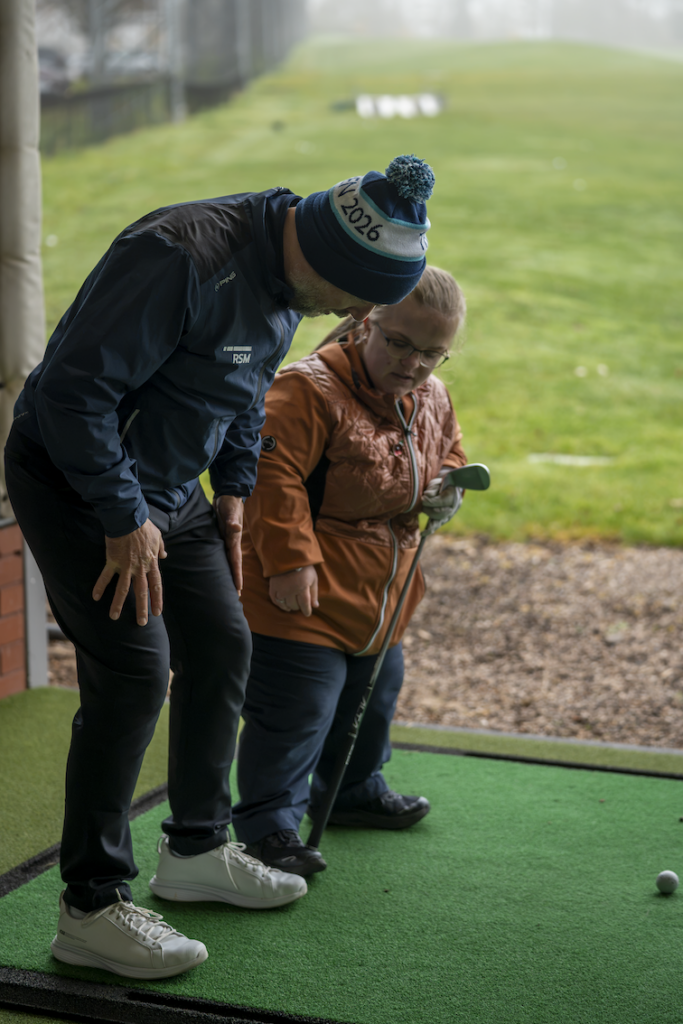
‘Understanding massive opportunity’
A major take-way of the day was around quality communication between coach and golfer from the first moment of meeting, asking open questions and building trust – all required coaching skills but here of great significance in order to break down barriers to get started in golf.
Mark Taylor, Head of Coach Education and Instruction at EDGA, said: “It will only take a few minutes for a student when engaging in Learning from the Edges – observing the adaptive skill of the players, and then seeing how coaches and club fitters can work to maximise their technique – to understand the massive opportunity here for them to coach at a whole new level, and to a completely new audience.
“And a little into the training session, by watching what a player can do, rather than what they can’t do, they are then gaining the confidence to supplement their existing coaching skills and build their professional capability going forwards. Learning from the Edges enables coaches to widen their customer base, grow their business, while helping to make their golf venue more inclusive going forwards.
“These coaches can start to learn the coaching considerations needed to support any player with a physical, sensory or intellectual impairment in greater detail, and really grow their portfolio. So much of this is about studying the function of the player, while increasingly, sophisticated club fitting can also help to transform the potential of any player.”
Mark pointed out that around only one percent of the world’s population plays golf, and there are around 16 percent of people with a disability, therefore potential market increase is considerable.
EDGA has worked closely with the The PGA of GB&I to share EDGA’s Learning from the Edges, so that as many coaches as possible can benefit. The PGA has been highly supportive of this coaching camp, as have hosts The Belfry which provided its driving range for the sessions.
Learning from the Edges is an integral component of the newly created platform ‘EDGA Learn’. In this, the second PING EDGA Camp of its kind, one of the key differences this year is that attendees will be able to continue their learning through access to EDGA Learn after the event, extending the benefits of the training beyond the camp itself.
PING a world-leader in the field
PING is a world-leader in the field of custom-fitting; European Head of Fitting Nick Boulton was able to share the company’s philosophy and groundbreaking work, alongside four established golfers with a disability that PING has supported closely.
Adam Dalton, 21, a golfer born with multiple limb difference (his catch phrase is ‘no hands, no limits’), opened up the session by choosing a flag 100 yards down the range and hitting four consecutive perfectly struck wedge shots and then striking long drives down the range, a club he had once been told he would never be able to use.
In the last three years PING has created wonderfully balanced longer shafted clubs for Adam, customised and fitted specifically for his requirements, which he is able to tuck under his arms during the swing. He has achieved a current WHS Handicap Index of around 15, winning trophies in EDGA-supported G4D tournaments and playing in The G4D Open.
“When I first started on this journey I never thought I’d get to here,” said Adam. “Not just in golf but also in life; golf has helped my confidence in so many ways, and PING has transformed how I can play. I used to use standard clubs and the grips gave my skin lesions and sores, and I had injuries, but the PING team has always found solutions. On the coaching side I’d say that it is about focusing on the person in front of you and not being afraid to ask lots of questions; remember, we want to talk to you so that we can improve.”
Ellie Perks, aged 22, a player with short stature, who recently completed the PGA Foundation Degree, could speak to the audience as both a G4D player and a coach.
“One of the main reasons I love golf is because the ball is stationary and I can take my time in addressing the ball. The golf ball cannot see who is addressing it, it is only interested in what the club face is doing at impact. You can also have equipment fitted around your needs; a lot of sports don’t give us that opportunity. PING has done a great job trailblazing this side of the game.”
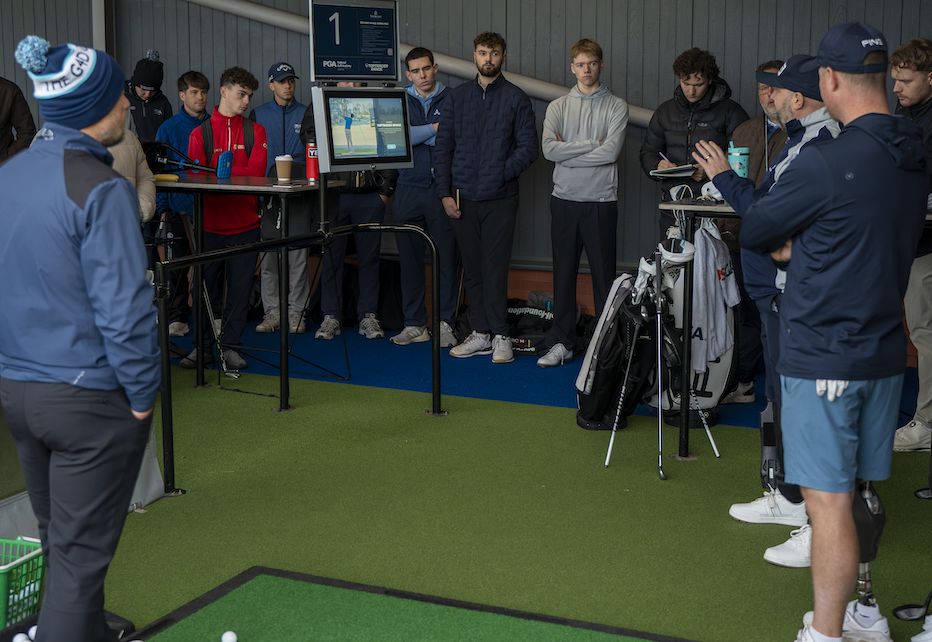
Innovation as a solution
Mark Taylor and Nick Boulton showed the audience two new golf club hosels that they have designed and produced. These support universal PING fitting components: one at an angle of 10 degrees and a second at 20 degrees.
Both pioneering designs have already supported both seated and short stature players, enabling optimised club fitting and a wider selection of shaft options for each of these player functions, resulting in proven and tested gains in ball flight and impact data. Ellie Perks hit some excellent drives to demonstrate how previously she had been pulling drives but was now delighted with her shot-making.
Twice-former English Disability Open winner Brad Smith, 32, and Afghanistan war veteran Scott Blaney, 40, were able to share their stories with attendees. Both have an above-knee amputation on the right ‘trail’ leg in their swings.
Scott, who only took up the game after injury during military service in 2007, is now a professional coach at The Belfry encouraging people of all ages and abilities to reach their potential through the game.
Both men demonstrated how their impairments affected their swing movement, how their bodies were put under greater pressure than average, leading to fatigue, and how they worked around these factors to play their best golf, assisted in their best individual fitting options by PING.
Coaches and club fitting in harmony
Mark Taylor said: “I think one of the key learnings, is that coaches can get out into the communities, they can start to work with players with different functions and disabilities and try to remove some of the constraints and the worries that they may have around working with this new audience in golf.”
Talking about EDGA’s partnership with PING and The PGA, Mark added: “It’s vitally important. We have research across other areas of golf for the disabled, but having a global leader in equipment technology behind us is essential so we can keep at the forefront, collectively developing new equipment which makes the game even more accessible to people with any health condition entering the game. To be able to share best practice with The PGA of GB&I and draw on their knowledge is a privilege, and we have no doubt that Learning from the Edges can help any professional coach in their work.”
Mark added: “People today have referenced a number of times the PING family. I think this comes from a mindset of wanting to help everyone to play their best, including people who may feel golf is not for them for various reasons.
“It’s very nice to be able to also bring in that expertise when we need it, when it comes to club fitting and anything that I need, I’ve got PING behind me to provide me with that information and help develop our educational programme. So it’s great to be able to send an email, pick up the phone and speak to the guys in the PING family when I can.”
Mark Skinner, Head of Member Education at The PGA, said: “We are incredibly proud to support the outstanding work of EDGA. Their expertise has been instrumental in helping The PGA develop its Inclusive Playing Handicap framework and in equipping coaches to make the game more accessible.
“We also greatly value our partnership with PING. Their shared commitment to innovation, education and inclusivity is helping PGA Professionals better support golfers of all abilities, while creating more opportunities for people of all abilities to engage with and enjoy the game.”