

This series of research pieces is brought to you by Inrange Golf Technology
Maximising your range occupancy isn’t just about getting more people through the door, it’s about attracting the right mix of customers and keeping them coming back. (This is the second in a series of five information articles first published by inrange and now brought to GBN for the benefit of all our readers)
The most successful ranges occupancy is made up of all three different customer types: golfers, social players, and large groups/events. How you position your venue in the market, will determine what your occupancy split will look like.
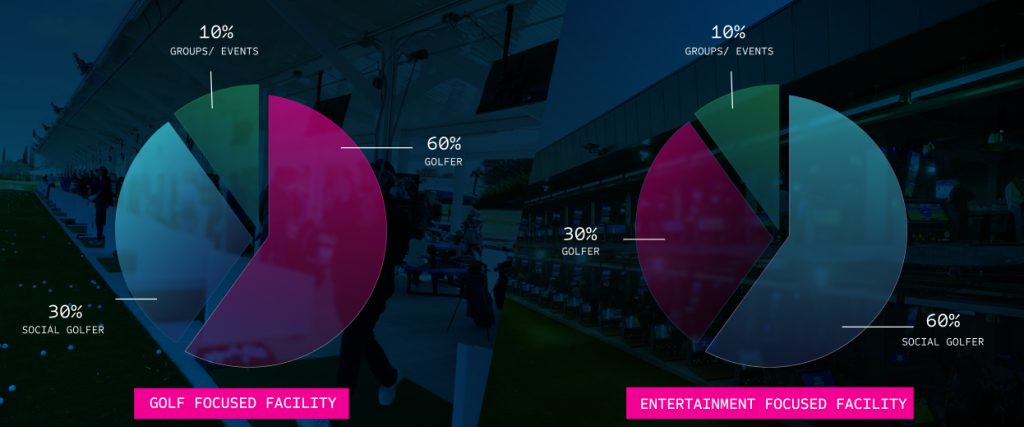
What does each segment care about
1. The Golfer (practice players)
This segment is the core for golf-focused venues and a vital part of the mix for entertainment-driven ones. To cater to the golfer
- Focus on core needs: Provide bay basics like fresh mats and good balls as well as heating/ cooling for your bays
- Encourage repeat visits: Incentives like personalised experiences, coaching programs, and premium range features for regulars, membership discounts, loyalty rewards, and targeted promotions.
- Encourage prebooking: Utilise a booking system to encourage visits and booking ahead.
- Leverage Net Promoters: Loyal customers can drive referrals and encourage them to bring friends by offering referral incentives.
- Attract new golfers: Initiatives like ‘Get Into Golf’ programs, beginner-friendly events, and easy access to coaching as well as cross promotion with near- by golf courses (without a range).
- Vouchers and Bundles: Pre-paid packages make visits feel ‘free,’ increasing frequency and engagement.
- Create a welcoming environment : Ensure a welcoming experience that makes golfers want to return more often.
2. Social Players (smaller groups)
Attracting this segment is crucial for entertainment focused venues and adds valuable occupancy for golf-focused venues. We’ve seen the following strategies work to increase this segment of customer:
- The place to be in the evenings: Create a fun, welcoming atmosphere where friends gather for a great time, like Chi Chi The Golf Range has done with Friday Fever by leveraging F&B offerings and live music.
- Build a strong brand identity: Make your venue a go-to destination, like Chi Chi, Launchpad, Swingyard and Good Time Golfin’ have successfully done. They have created a brand and venue which is accessible and attractive that resonates with different demographics.
- Ensure a great experience: Ensure a seamless experience with engaging in-bay technology, excellent customer service to bay, and a well-curated F&B offering.
- Foster relationships: Build customer relationships through personalised follow-ups and loyalty programs.
- Attract new customers: Entertainment-focused events, social media promotions and advertising, and themed nights.
- Create social competition: Organise leagues and Events to encourage social competition with structured leagues and fun group events.
3. Large groups and corporate bookings
This segment is valuable for increasing overall occupancy and revenue, especially during off-peak times. To capture large groups we suggest:
- Developing a dedicated sales function: Proactively engage corporate clients and event planners and ensure a great customer service to incoming requests
- Tailor experiences: Offer customisable experiences, high-quality service, and tailored F&B packages.
- Corporate Partnerships: Leverage business networks to bring in regular, high-volume bookings.
- Target Off-Peak Times: Attract corporates and larger groups which have the benefit not only of better prices but to fill hours that are less attractive to your other customer groups.
Something else that the best operators are doing to keep occupancy high all year round, is ensuring that they are timing their marketing efforts to line up with the ‘most responsive’ times to generate interest and footfall. Market to your desired segment at the right times
- Golfers = around majors, big golf events, Inrange competitions like the Inrange World Tour
- Social players = school holidays, major seasonal events (Valentines, St. Patrick’s, 4th July)
- Group Events = 3 months before end of year while they are still planning their end of year function + Ad hoc when businesses are celebrating openings or new venues etc.
In order to keep occupancy at or near its peak at all times of the year (and to avoid becoming just a ‘fad’), comes down to how sticky your visitor experience is. When our Customer Success team meets with Inrange partners, they discuss the two key metrics that will create long-lasting occupancy at your venue: customer return rate and net promoter score (NPS).
Key takeaway: No venues can rely on just one customer type. The most successful venues have a strategy for all three segments, tailoring their offerings to meet the unique needs of each and maximise overall occupancy.
See Maximising Range Revenue part 1 here.
For more industry insights connect with Inrange on LinkedIn.
Maximising Range Revenue; Part 3 will be published by GBN in two weeks