

Sotogrande, one of Spain’s leading golf and residential communities, has presented its Sustainability Report, concluding a two-year process aimed at organising, measuring, and projecting a commitment to sustainability that has formed part of the destination’s evolution for more than six decades.
Since its origins, Sotogrande has developed a model closely connected to its surroundings, in which environmental preservation, low-density development, landscape quality, and the pursuit of a balance between growth and nature have played a fundamental role.
The recently published Sustainability Report already reflects tangible results from this evolution. In 2025, water consumption was approximately 23% below the level recorded in 2023, electricity consumption was 3% lower than in 2023, and operational photovoltaic capacity increased by 170% compared with 2024. These advances provide the foundation for continued improvement towards 2030.
The new plan does not represent a starting point, but rather the natural evolution of this track record towards sustainability management that is more structured, professional and, above all, measurable.
Sotogrande is now turning this commitment into a comprehensive strategy that enables priorities, objectives, indicators, and monitoring mechanisms to be established. In this way, sustainability is also consolidated as a strategic framework for decision-making, investment planning, and resource management, with 2030 as its horizon. This approach reflects the philosophy of the plan itself: it is not only about reducing impacts, but about generating a positive effect on the local area, people, and the community.
Rita Jordao, Marketing Director at Sotogrande, S.A, said: “Sustainability has been part of the way we have understood Sotogrande for decades. This plan is the result of extensive work that allows us to take a further step: organising all of that commitment, measuring it, and setting specific objectives so that we can continue to improve.
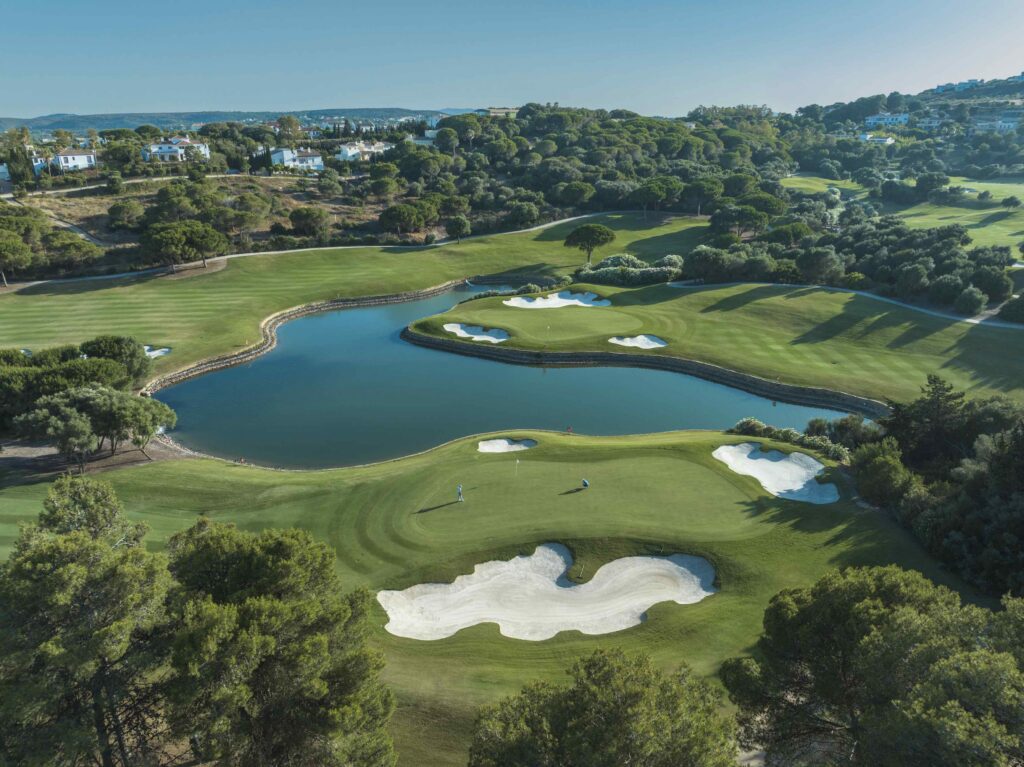
“We are not starting from zero; we are building on a track record of more than 60 years that we now want to carry forward into the future with a rigorous methodology and a clear ambition to generate a positive impact for people, the local area, and future generations.”
The 2030 target establishes a roadmap aimed at progressing towards climate neutrality, consolidating a circular economy model, strengthening people’s wellbeing and reinforcing Sotogrande’s position as a European benchmark for sustainable residential tourism. This is structured around four main pillars: environment, people, economic prosperity, and responsible governance.
In environmental terms, the sustainability plan sets targets for 2030 of reducing water consumption by 25%, decreasing energy consumption by 20%, exceeding 60% use of renewable energy, reducing emissions by 50%, achieving a recycling rate of 65%, and reducing waste sent to landfill to below 10%.
Sotogrande has already implemented measures aimed at improving water efficiency, optimising energy consumption, expanding photovoltaic production, supporting the circular economy, and protecting biodiversity.
The first indicators also make it possible to quantify this evolution. In 2025, water consumption was approximately 23% below the level recorded in 2023, while electricity consumption was 3% lower than in 2023.
Operational photovoltaic capacity also increased from 330 kWp in 2024 to 890 kWp in 2025 – an increase of 170% – thanks to the installation at SO/ Sotogrande Hotel in addition to the existing facility at La Reserva. The hotel installation alone produced 618 MWh of renewable energy for self-consumption during 2025 and avoided approximately 270 tonnes of CO₂.
The sustainability plan also incorporates a social element based on the conviction that people are one of the principal assets in building a resilient destination capable of generating long-term value.
Sotogrande currently has a workforce of 424, with a high level of employment stability. Some 95% of contracts are permanent, a particularly significant figure in a sector traditionally affected by seasonality and high staff turnover.
This is accompanied by a growing commitment to professional development. During 2025, 11,119 hours of training were delivered, 34% more than the previous year and equivalent to 26.2 hours per employee – covering areas including innovation, digital transformation, artificial intelligence, sustainability, risk prevention, and regulatory compliance. The target is to achieve at least 30 hours of training per employee each year.
Alongside training and employment stability, the plan identifies emotional wellbeing, work-life balance, risk prevention, and equal opportunities as priority areas within the social dimension of sustainability.
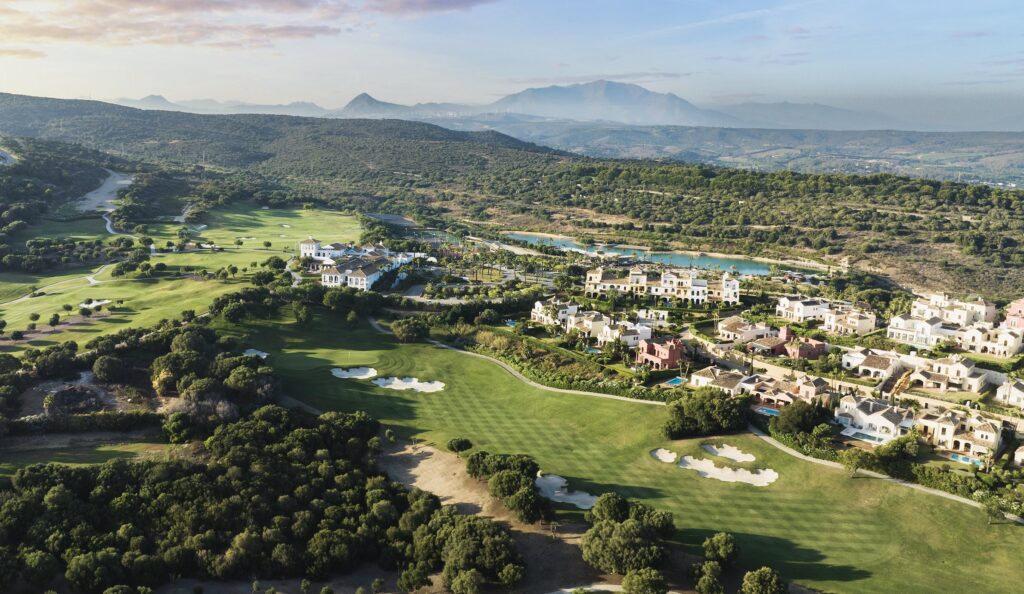
The third major pillar builds on another characteristic that has defined Sotogrande’s evolution: its capacity to generate economic activity and value beyond its own boundaries.
The model combines residential, tourism, sporting, commercial, and service activity, creating an ecosystem that is less dependent on seasonality than other traditional tourist destinations. Today, it encompasses around 7,000 private properties, 300 associated businesses, and 2,500 permanent international households. In 2025, the Sotogrande Group recorded turnover of €138 million.
The 2030 Sustainability Plan seeks to strengthen this capacity to generate shared value by consolidating Sotogrande’s international position, attracting quality investment, and strengthening the business community connected to the local area, with the aim of creating prosperity in a responsible and lasting way.
One of the principal advances introduced by the plan lies precisely in how sustainability will be managed and evaluated from now on. Based on the principle that what is measured can be improved, Sotogrande has established a specific governance and monitoring structure. The Sustainability Committee acts as the coordinating body for the ESG strategy and integrates environmental, social, and economic dimensions into the management of the destination.
In turn, a balanced scorecard will connect objectives, actions, indicators, responsibilities, timeframes, and evidence – enabling the level of progress against commitments to be assessed periodically, and improvement measures to be adopted.
This system will enable sustainability to become a process of continuous evolution, supported by data and verifiable results, and reinforced through dialogue with property owners, residents, employees, customers, suppliers, public authorities, visitors, and associations – all of whom are incorporated into the strategy as stakeholders.