

The 10th Ryder Cup – the 1953 match at Wentworth, writes Ross Biddiscombe, was the most anticipated since the series began. The world was only eight years clear of World War II and the British population was one year short of the end of rationing. In terms of Britain and the US, the phrase “them and us” had entered the vocabulary. GB golfers were the poor relations of their American cousins and even the best British pros relied on pro-shop salaries, while their counterparts across the Atlantic were full-time tournament professionals with a lucrative countrywide tour offering substantial prize money.
But the green shoots of a British economic recovery were emerging and the nation was bathed in the joy of the Queen’s coronation the year before, as well as a British-led expedition that was first to conquer Mount Everest. On the sporting front, England’s cricketers regained the Ashes and footballer Stanley Matthews was in his pomp winning football’s FA Cup with a virtuoso performance. To cap it all, perhaps the Ryder Cup could be won.
The finest British golfer of the mid-20th century, Henry Cotton, took was captain and invoked a new attitude after three demoralising post-war defeats. Cotton said: “To be a champion, you must act like one” and insisted on the best of everything for his team (just as Tony Jacklin did 30 years later), including food (despite rationing) and even relaxing entertainment (his players attended the West End musical Guys and Dolls on a practice evening).
The press also did its best to add spice to the contest despite the Americans being overwhelming favourites and arriving with confident smiles and their custom-made golf bags and matching clothing.
Cotton’s young team had few scars of previous defeats. Rookies Peter Alliss (22-years-old) and Bernard Hunt (23) led the way, while the Americans were without Ben Hogan who refused an invitation to play. A large, confident crowd of Londoners would watch two days of action with only 12 points to play for – they felt anything could happen.
However, on the opening day, the match followed a familiar pattern – the Americans led 3-1 (the British had not won the foursomes since 1933) and two of the matches were huge US victories. Cotton’s decision to leave out experienced players like Dai Rees and Max Faulkner and blood his youngsters had rebounded. Cotton is reported to have told his team he would “kick the (their) asses” that night and the rousing words did the trick.
The spectacle of the following day ranks among the most dramatic of all-time within the Ryder Cup’s 98-year history with a cast heroes and villains plus an outcome that was a springboard for the fierce rivalry that still resonates with the teams of today.
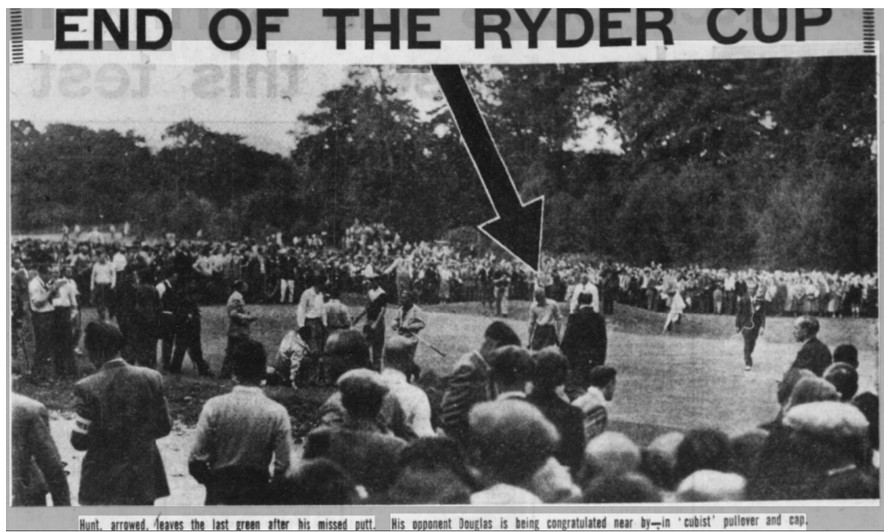
To read the rest of this Ryder Cup story, click https://rossbidd.substack.com/p/ryder-cup-2025-series-part-7-one?r=2jbyei
Ross Biddiscombe is the author of Ryder Cup Revealed: Tales of the Unexpected & his regular Ryder Cup posts are on the Substack platform; click here for the app https://substack.com/app and subscribe for FREE for receive extra Ryder Cup stories and other sporting journalism.